Why Social Connection Is One of the Greatest Predictors of Health

By The Reality of Health & Wellbeing (RHW)
If I were to ask you what has the greatest influence on your long-term health, what would you say?
Perhaps diet.
Exercise.
Sleep.
Not smoking.
These are all important, yet one of the strongest predictors of health is something many people overlook.
The quality of our relationships.
Human beings are not designed to live in isolation. We are biologically, psychologically and spiritually wired for connection. From the day we are born, our wellbeing depends upon the people around us. As children we rely on our parents, as adults we flourish through friendship, family and community, and in old age it is often companionship, more than medication, that determines quality of life.
Modern medicine is beginning to recognise what many societies have understood for centuries. Loneliness is not simply an unpleasant feeling. It is associated with an increased risk of heart disease, stroke, depression, cognitive decline and even premature death. Some researchers have suggested that chronic social isolation carries health risks comparable to well-established lifestyle factors such as smoking.
This should make us pause.
We often speak about healthy eating and physical activity, yet how often do we ask someone, "Who do you spend time with?" or "When did you last have a meaningful conversation?"
Health is not lived in isolation.
It is lived in relationships.
One of the remarkable features of Islam is that acts of worship are rarely separated from community life. While moments of private devotion are encouraged, the rhythm of Islam continually brings people together. We pray together, break our fast together, celebrate together and support one another through times of hardship. Even fasting, perhaps the most personal of acts, becomes a deeply communal experience as families gather for ifṭār, neighbours exchange food and communities stand shoulder to shoulder in prayer. As one reflection observes, even though fasting is performed by the individual, Ramadan is experienced collectively through family, congregation and shared worship.
This is more than tradition.
It is part of how human beings flourish.
There is another lesson that feels especially relevant today.
Many of us know our colleagues better than we know our neighbours. We drive into our streets, press a button to close the garage door and disappear into our homes. Weeks or months can pass without a meaningful conversation with the people living only metres away.
Yet the Islamic tradition places extraordinary emphasis on neighbourliness. The Prophet Muhammad ﷺ taught that faith should be reflected not only in worship but in the way we treat those who live around us. Good neighbourliness is not simply avoiding harm; it is actively showing kindness, patience and consideration. The transcript highlights that honouring neighbours, guests and those around us is a central expression of faith rather than an optional act of courtesy.
Imagine what our communities would look like if every street had one household that regularly checked on elderly neighbours, shared food, offered practical help or simply greeted others with warmth.
Health would improve long before a prescription was written.
Strong communities reduce loneliness.
They encourage physical activity as people spend more time outdoors.
They improve emotional resilience because people know they are supported.
They create a sense of belonging, one of the deepest human needs.
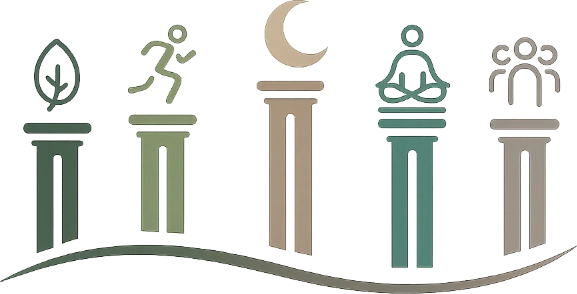
This is why social connection deserves to sit alongside nutrition, movement and sleep as one of the pillars of health.
At The Reality of Health & Wellbeing, we believe that true wellbeing is built through relationships as much as routines.
Perhaps your next step towards better health is not another supplement or another diet.
Perhaps it is making a phone call to a relative.
Visiting an elderly neighbour.
Joining your local walking group.
Sharing a meal with family without distractions.
Introducing yourself to someone new at your local mosque.
Small moments of connection have the power to change lives.
In a world that often prizes independence, productivity and individual success, we would do well to remember that human beings were never created to thrive alone.
Sometimes the most powerful medicine cannot be found in a pharmacy.
Sometimes it begins with a conversation.