
Why Do We Feel Empty? An Islamic Perspective on the Human Heart
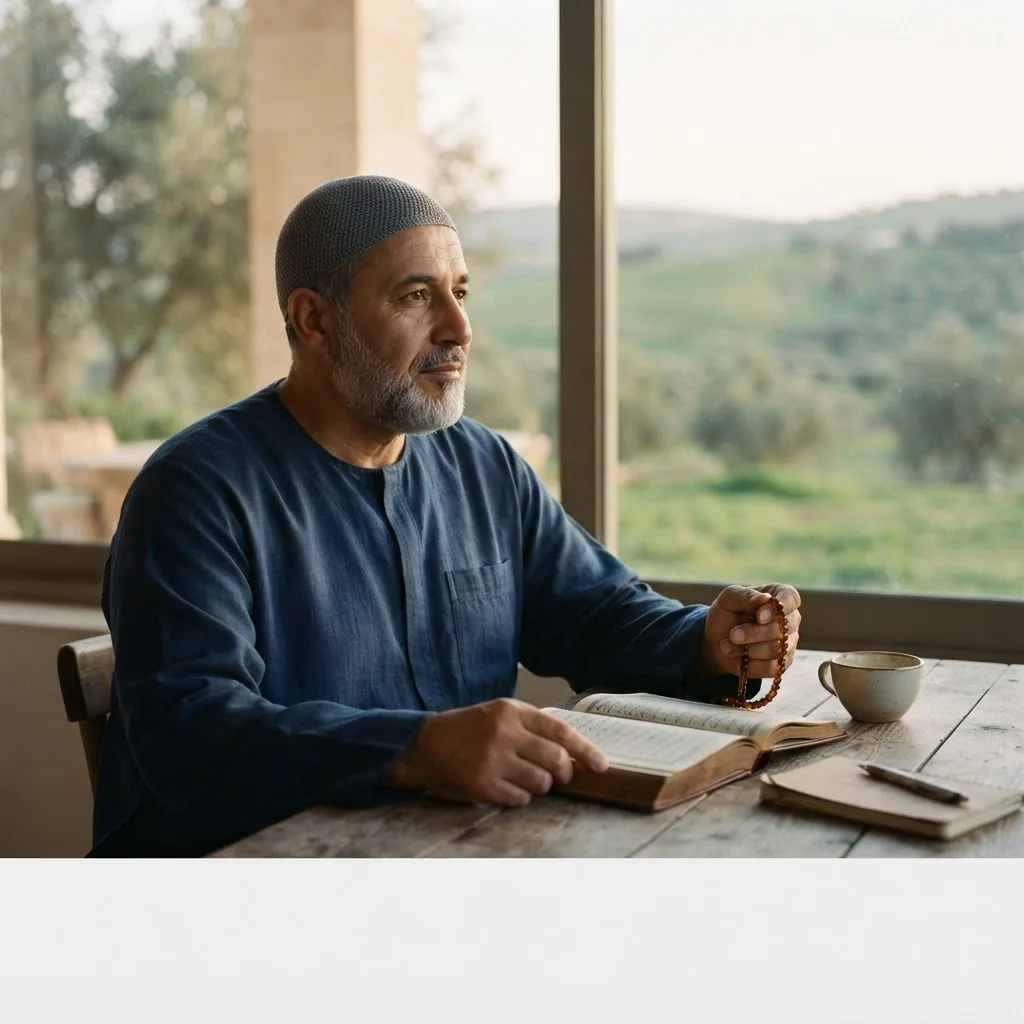
As a GP, I regularly meet people who appear to have everything they need to live a comfortable life. They have stable employment, supportive families, financial security and access to healthcare. Yet many quietly admit to feeling empty. They describe a persistent sense that something is missing, even when life appears to be going well.
Medicine can often identify contributing factors such as depression, anxiety, loneliness or chronic stress. These deserve careful assessment and appropriate treatment. Yet there are also patients whose investigations are normal, whose circumstances are relatively stable and who still describe an inner void that is difficult to explain.
Modern healthcare has become increasingly interested in wellbeing, resilience and purpose. These are important developments. However, Islamic tradition invites us to ask a deeper question.
What if the heart is longing for something it was created to seek?
The Qur'an reminds us that human beings were not created without purpose. Our ultimate purpose is to know Allah, worship Him and live in accordance with His guidance. When that purpose becomes disconnected from daily life, the heart naturally begins searching elsewhere for fulfilment.
We often assume that the solution is more. A better job. A larger home. Greater recognition. More possessions. Yet these achievements rarely satisfy for long. One goal is reached and another immediately appears. The pursuit continues, but contentment remains elusive.
Classical Muslim scholars observed this long before modern psychology began studying the relationship between purpose and wellbeing. They understood that the human heart was never designed to find ultimate fulfilment in temporary things. The heart was created for Allah.
This does not mean that worldly blessings are unimportant. Islam encourages work, family life, education, physical health and service to society. These are all blessings from Allah. The problem arises when temporary gifts are expected to fulfil a need that only the Creator can satisfy.
Perhaps this helps explain why acts of worship bring a unique kind of peace. Prayer interrupts the busyness of the day and reminds us of our true purpose. The Qur'an nourishes something deeper than the intellect. Visiting the mosque offers more than social connection; it reconnects the heart with its Lord. Charity shifts our attention from what we possess to how we can serve others. Even ordinary work can become meaningful when performed with a sincere intention to please Allah.
In general practice we rightly encourage healthy eating, regular exercise, restorative sleep and strong relationships. These habits remain essential. They improve health, reduce disease and enhance quality of life.
Yet from an Islamic perspective, they are not the foundation.
The foundation is the heart.
A healthy body with an empty heart is still incomplete. A healthy heart, however, gives meaning to every aspect of life. It transforms work into service, family into trust, hardship into patience and success into gratitude.
Perhaps the growing epidemic of emptiness is not simply a medical or psychological problem. Perhaps it is also a spiritual one.
As healthcare continues to explore what it means to flourish as human beings, Islam offers a profound insight that has guided believers for centuries.
The body needs food.
The mind needs knowledge.
The heart needs Allah.
When each receives its rightful nourishment, the human being begins to flourish as they were created to.