The Mosque: Islam's Original Social Prescribing Centre
For many years, healthcare has focused primarily on diagnosing disease and prescribing treatment. Increasingly, however, we are recognising that health is influenced by much more than medicine alone. Loneliness, inactivity, poor mental wellbeing, lack of purpose and social isolation all have profound effects on physical and emotional health. This has given rise to the concept of social prescribing, where healthcare professionals encourage patients to engage with community activities, walking groups, volunteering and other social interventions alongside conventional medical care.
While the term is relatively new, the principle is not.
Over fourteen centuries ago, Islam established an institution that naturally encourages many of these behaviours. That institution is the mosque.
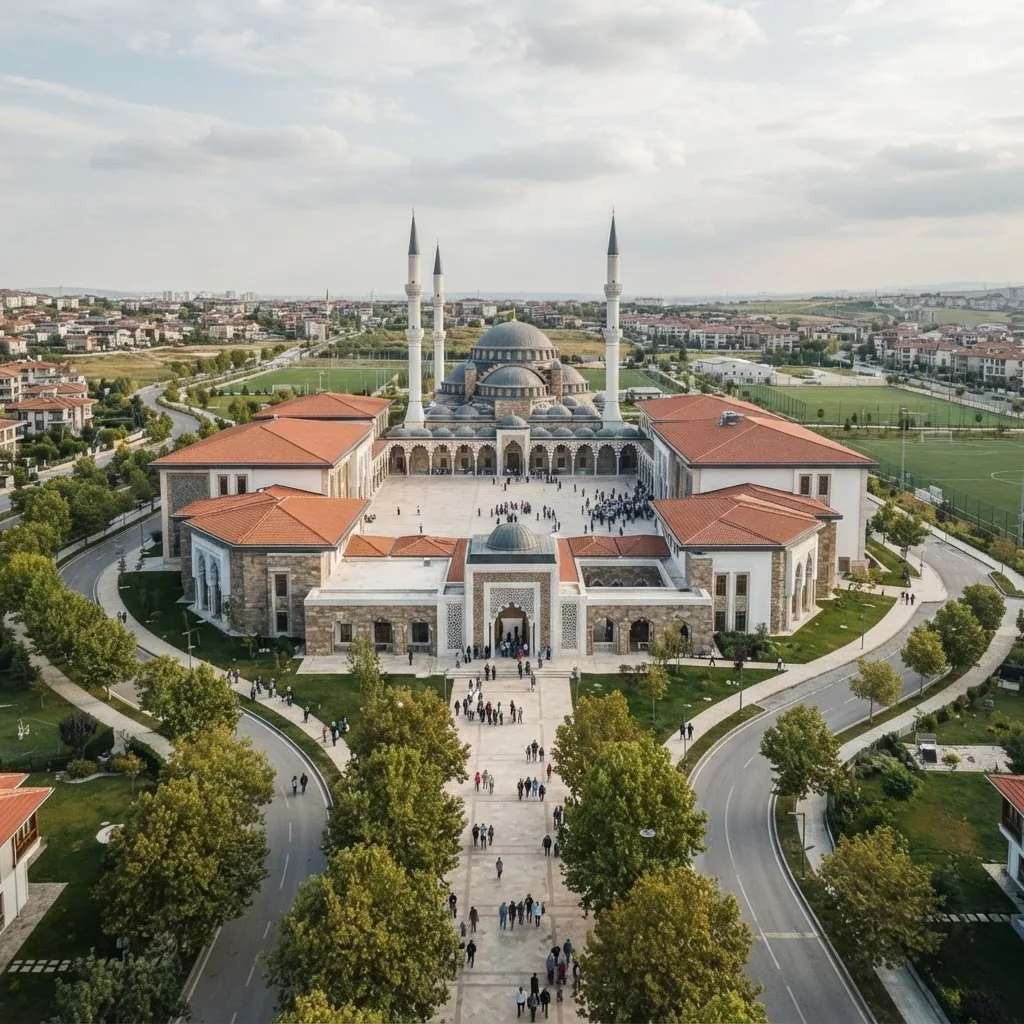
To describe the mosque simply as a place of worship, however, would be incomplete. The mosque is first and foremost a House of Allah. It is a place where believers leave behind the distractions of the world to stand before their Lord. The health benefits that arise from attending the mosque are real and significant, but they are not its primary purpose. Rather, they are blessings that accompany sincere worship.
Allah says,
"In houses which Allah has ordered to be raised and that His name be remembered therein..." (Qur'an 24:36)
In an age where many people feel overwhelmed by work, financial pressures, family responsibilities and a constant stream of information, the mosque offers something increasingly rare: sanctuary.
Stepping through its doors is an opportunity to pause. The noise of everyday life is replaced by remembrance of Allah, recitation of the Qur'an and moments of quiet reflection. Problems that once seemed overwhelming are viewed from a different perspective when placed before the One who controls all affairs.
The Prophet ﷺ taught that whenever people gather in one of the houses of Allah to recite the Qur'an and study it together, tranquillity descends upon them, mercy envelops them, the angels surround them and Allah mentions them amongst those who are with Him. Few places offer such profound gifts. Likewise, the angels continue to supplicate for the believer who remains in their place of prayer in a state of purity, asking Allah to forgive them and have mercy upon them.
Modern medicine increasingly acknowledges the harmful effects of chronic stress. Persistent stress contributes to anxiety, depression, cardiovascular disease, poor sleep and weakened immunity. Islam addresses stress in a unique way by repeatedly inviting the believer to return to Allah throughout the day. The mosque becomes a refuge where the heart finds rest before the body does.
Alongside these spiritual blessings come remarkable benefits for health and wellbeing.
Every journey to the mosque encourages movement. Walking remains one of the simplest and most effective forms of exercise, reducing the risk of cardiovascular disease, diabetes and many other chronic conditions. For Muslims who regularly attend the mosque, physical activity becomes woven into everyday life rather than something that requires separate planning. More importantly, every step is an act of worship, rewarded by Allah.
Before each prayer comes wuḍūʾ. Five times a day Muslims wash their hands, mouth, nose, face, arms and feet. This regular practice reinforces personal hygiene while also creating moments of mental preparation before standing in prayer. The body is cleansed, but so too is the heart as the believer prepares to meet their Lord.
The daily prayers also establish a healthy rhythm. Instead of life revolving solely around work, screens or personal ambition, the day is punctuated by purposeful pauses that bring perspective and balance. This regular structure promotes discipline, mindfulness and gratitude.
Perhaps one of the greatest strengths of the mosque is its ability to build community.
Loneliness has become a major public health challenge. Yet Islam has long encouraged believers to know their neighbours, visit the sick, attend funerals, support those in difficulty and strengthen family ties. The mosque provides the setting where these relationships naturally develop.
If an elderly worshipper who usually attends Fajr prayer is absent for several days, someone notices. A neighbour may visit to check on them. A meal may be delivered. Practical help may be offered. Long before healthcare developed the language of community care or social prescribing, Muslim communities were quietly practising it.
The Prophet ﷺ also taught compassion beyond the walls of the mosque. The believer leaves prayer carrying its values into society by helping neighbours, supporting widows, feeding the hungry and caring for the vulnerable. The mosque is therefore not an escape from the world but a place that prepares people to serve it.
Its influence extends even further. Mosques have historically been centres of education, charity, consultation and reconciliation. They strengthen families, encourage volunteering and provide a sense of belonging that many people struggle to find elsewhere.
Seen through the lens of modern healthcare, the mosque naturally promotes many of the factors known to improve health: regular movement, personal hygiene, routine, social connection, emotional support, purpose, generosity and lifelong learning.
Yet to reduce the mosque to a health intervention would miss its greatest purpose.
The believer does not attend primarily to lower blood pressure, reduce loneliness or improve fitness. They come because Allah has invited them to His house. They seek His pleasure, His forgiveness and His closeness.
The remarkable reality is that when worship is placed at the centre of life, many of the ingredients required for human flourishing gather around it.
Perhaps this is one of Islam's most beautiful lessons. True wellbeing begins not by chasing health itself, but by turning towards the One who grants it.
As healthcare continues to embrace social prescribing, it is worth reflecting that Islam has nurtured this holistic model for centuries. The mosque remains a place where bodies move, minds find peace, communities grow stronger and hearts return to their Creator.
It is not simply a place to pray.
It is a sanctuary for the soul, a refuge from the pressures of life and one of the greatest gifts Allah has given to His servants.