
Seeing the World Through the Eyes of Faith
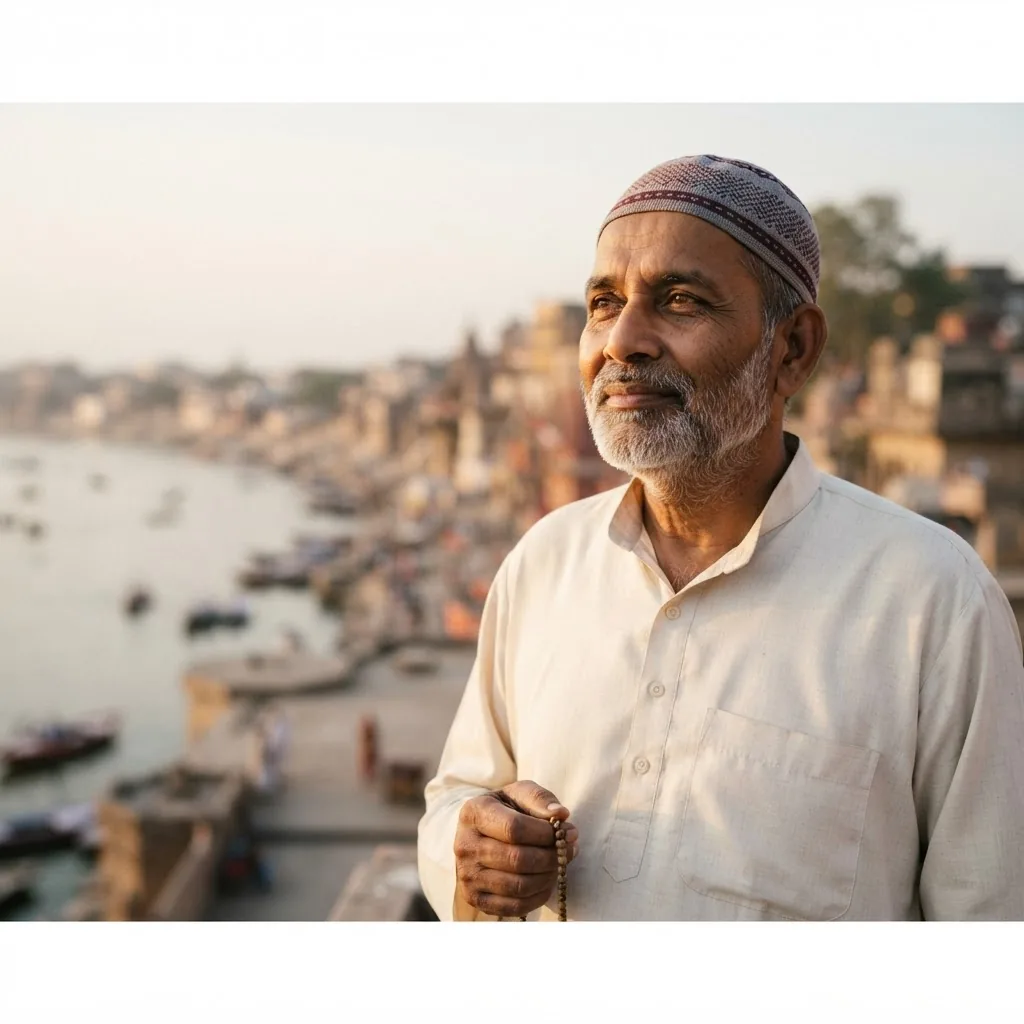
The way we see the world shapes the way we live within it.
Two people can witness the same event and come away with entirely different conclusions. One sees only disappointment, while another sees opportunity. One notices only suffering, while another discovers wisdom. The circumstances may be identical, but the lens through which they are viewed changes everything.
Perhaps one of the greatest gifts that Islam offers is not simply a set of beliefs or practices, but a new way of seeing.
The Qur'an repeatedly calls upon us to reflect. It directs our attention towards the heavens, the earth, the alternation of night and day, the diversity of creation and even our own hearts. It invites us to look beyond appearances and recognise that the world is not random or meaningless but filled with signs pointing towards its Creator. Every moment becomes an opportunity to recognise the wisdom, beauty and mercy of Allah.
Modern life often encourages the opposite. We are conditioned to chase the next achievement, the next purchase, the next experience or the next distraction. Success is measured by possessions, productivity and status. Yet despite remarkable advances in technology and medicine, many people continue to struggle with anxiety, dissatisfaction and an enduring sense that something is missing.
Perhaps the problem is not that we lack more, but that we have forgotten how to see.
One of the beautiful Names of Allah is Al-Qarīb – The Near. This nearness is unlike the nearness of created things. Allah is not confined by space or time, yet He tells us that He is nearer to us than our jugular vein. His nearness is experienced through His knowledge, His mercy, His care and His continual sustaining of creation. Even when we feel abandoned, overwhelmed or uncertain, He has not become distant. It is often our awareness that has become clouded.
This understanding transforms the way we respond to hardship. Faith does not deny suffering, nor does it pretend that pain is easy. Illness, loss, disappointment and uncertainty remain difficult. Yet they are no longer viewed as meaningless interruptions to life. Instead, they become part of a journey whose destination is always the mercy of Allah.
The Islamic tradition beautifully describes our existence as a journey. We come from Allah and to Him we shall return. Between those two realities lies the path of this world, with all its beauty, challenges and distractions. It is a journey through a landscape filled with opportunities to grow closer to our Creator, but also with countless temptations that can cause us to lose our way.
The Sunnah provides the map for that journey.
Sometimes people reduce Islam to a collection of rules and obligations. Yet the Sunnah is far more than a legal framework. It is an art of living. It teaches us how to eat with gratitude, speak with kindness, treat neighbours with generosity, respond to hardship with patience and success with humility. Every aspect of life is refined until the ordinary becomes an act of worship.
Far from restricting human flourishing, the Sunnah protects it.
One of the greatest obstacles on this journey is not the world itself but the ego. The lower self is constantly comparing, competing and craving what others possess. It whispers that happiness lies in acquiring more, being admired more or experiencing more pleasure. Yet these pursuits rarely satisfy the heart for long. They simply create new desires that demand fulfilment.
The believer is invited to remove these obstacles and rediscover contentment through remembrance of Allah. Rather than constantly asking, "What else do I need?", the heart begins to ask, "How can I become more grateful for what I have already been given?"
This change in perspective also transforms our relationships with others. Modern culture often encourages criticism, outrage and the constant search for faults. We become quick to judge and slow to excuse. The Prophetic way is strikingly different. It encourages us to overlook faults where possible, assume the best of others and actively seek out goodness. Compassion, forgiveness and generosity nourish the heart, while resentment, envy and constant criticism slowly darken it. What we choose to focus upon gradually shapes who we become.
The remarkable feature of this worldview is that it produces optimism without naivety. It acknowledges the reality of injustice, suffering and uncertainty, yet refuses to surrender to despair. The believer understands that while events may appear chaotic, they unfold within the wisdom of the One whose mercy encompasses all things. This confidence does not remove life's trials, but it provides the strength to walk through them with hope rather than fear.
Perhaps this is why Islam has always been described as good news. It begins with mercy, is sustained by mercy and ends with mercy. The believer's task is not merely to survive the journey through this world but to travel it with open eyes, a grateful heart and unwavering trust in the One who guides every step.
In an age overwhelmed by distraction, comparison and uncertainty, perhaps the greatest transformation is not changing our circumstances but changing the way we see them. When the heart learns to recognise Allah's nearness in every moment, even the ordinary becomes extraordinary, every difficulty carries meaning and every blessing becomes a reminder of the One from whom all goodness comes.