
Returning to the Floor: A Forgotten Sunnah with Timeless Benefits
Narrated Anas ibn Mālik (رضي الله عنه):
"To the best of my knowledge, the Prophet ﷺ never ate at a dining table (khiwān). When Qatādah was asked, 'Then upon what did they eat?' he replied, 'Upon a leather dining sheet spread on the ground (sufrah).'"
— Ṣaḥīḥ al-Bukhārī 5386
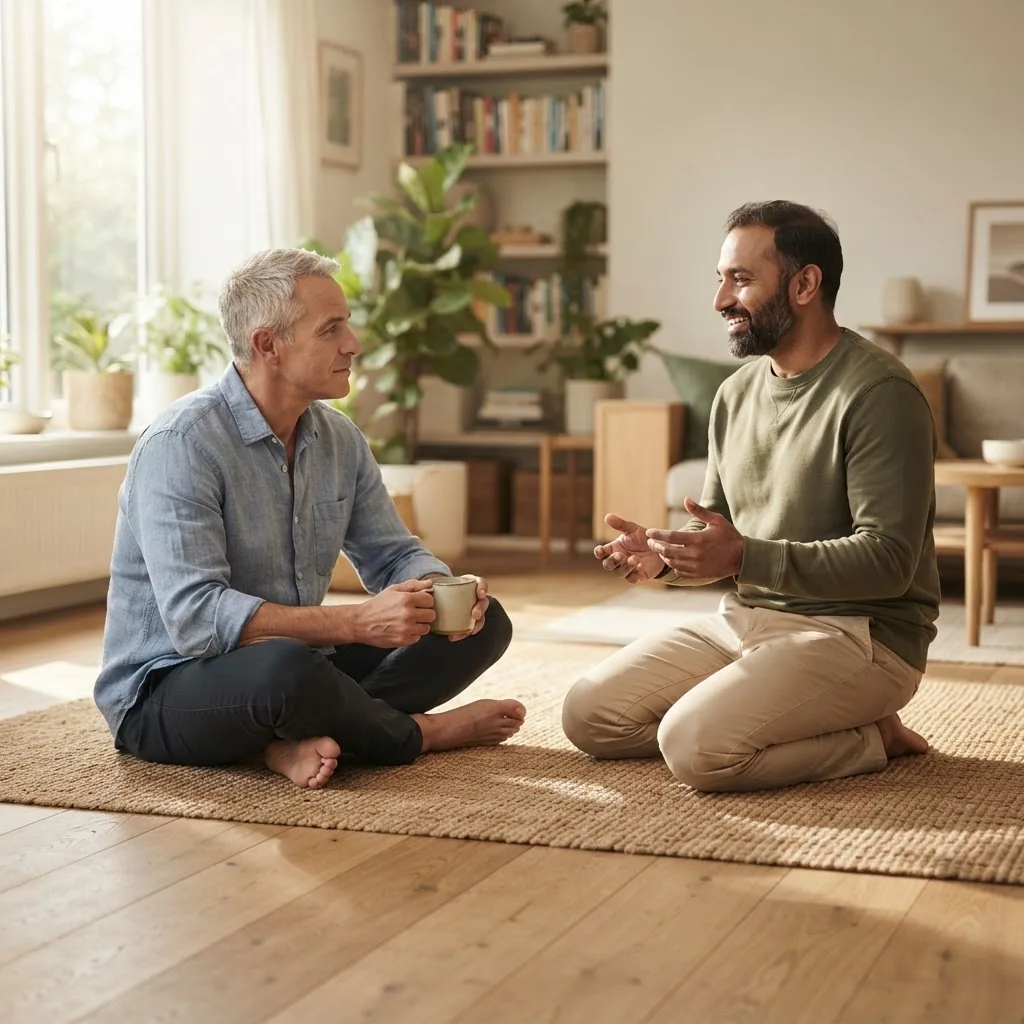
Modern life has changed the way we live in many ways, including something as simple as where we sit. Chairs, sofas and dining tables have become the norm, while sitting on the floor is now uncommon in many households. Yet for most of human history, and throughout the life of the Prophet Muhammad ﷺ, sitting on the floor was an ordinary part of daily life.
As Muslims, our desire to revive this practice comes from our love for the Sunnah. We follow the example of the Prophet ﷺ because it is a means of drawing closer to Allah. It is therefore interesting—not as proof of the Sunnah, but as an additional insight—that modern research into healthy ageing has begun to recognise the value of many traditional movement patterns, including regularly sitting on and rising from the floor.
Lessons from the Blue Zones
Researchers studying the so-called "Blue Zones"—areas of the world where people commonly live longer and remain active into old age—have identified several shared lifestyle habits. One of these is that movement is naturally built into everyday life.
In Okinawa, Japan, for example, traditional homes have long encouraged floor sitting for meals, conversation and relaxation. Rather than remaining seated in chairs all day, people repeatedly lower themselves to the floor and stand up again. These movements may appear insignificant, but when repeated many times each day over several decades, they help preserve mobility, balance and muscle strength.
This illustrates an important principle of lifestyle medicine: health is often shaped by the small movements we perform consistently rather than occasional bursts of exercise.
The Sunnah and Everyday Movement
Long before modern researchers began studying longevity, the Prophet ﷺ lived a life characterised by simplicity and natural movement.
The hadith of Anas ibn Mālik (رضي الله عنه) describes how the Prophet ﷺ ate from a dining cloth placed on the ground rather than at a raised table. In another narration he said:
"I do not eat while reclining."
— Ṣaḥīḥ al-Bukhārī 5398
These narrations primarily teach humility, gratitude and moderation. Any physical benefits are secondary, but they remind us that the Sunnah often encourages habits that are naturally compatible with good health.
Why Floor Sitting Matters
One of the consequences of modern living is that we rarely ask our bodies to move through a full range of motion. Sitting down on the floor and standing up again requires the coordinated use of the ankles, knees, hips and core muscles.
Repeated regularly, these movements help maintain:
- leg strength
- hip and ankle mobility
- balance and coordination
- core stability
- confidence when moving
Maintaining these abilities becomes increasingly important with age. Reduced strength and poor balance are major contributors to falls, fractures and loss of independence in older adults.
In this sense, every time we sit on the floor and stand up again we create what lifestyle medicine often calls a movement snack—a small amount of physical activity integrated naturally into daily life.
Strengthening the Core
Getting up from the floor is far more demanding than standing from a chair. It recruits the muscles of the abdomen, lower back and pelvis, which together stabilise the spine and maintain balance.
These muscles gradually weaken if they are rarely challenged. By contrast, regularly sitting on the floor encourages gentle, repeated activation of the core without the need for specialised exercise equipment.
Over many years, these seemingly minor movements may help preserve strength, posture and functional independence.
The Sunnah of Iḥtibāʾ
Among the sitting positions mentioned in the Sunnah is iḥtibāʾ, in which a person sits with the knees drawn towards the chest while wrapping the arms around the legs.
Besides being a recognised way of sitting among the Arabs, this posture naturally engages the abdominal and postural muscles while encouraging flexibility of the hips and lower back.
Again, the objective is not exercise in itself, but regular use of natural sitting positions means these muscles continue to be used throughout life.
Eating with Greater Awareness
Many people notice another practical benefit when eating on the floor: meals tend to become slower and more mindful.
Traditional sitting positions often encourage a more upright posture and a calmer pace of eating. Some people also find that folding the legs beneath or around the body makes them more aware of fullness, helping to avoid unnecessary overeating. While research has not established this as a proven physiological effect, it is an observation many people recognise in practice.
Combined with the Prophetic guidance to eat moderately and avoid filling the stomach completely, floor sitting may help cultivate a healthier relationship with food.
Reconnecting with Simplicity
Sitting on the floor also changes the atmosphere of a home.
It encourages simplicity, brings people physically closer together and creates opportunities for conversation without the formality of chairs around a table.
Some researchers have explored the concept of "grounding" through direct contact with the earth. Although the evidence remains limited and more research is needed, spending time outdoors and maintaining a closer relationship with nature is associated with benefits for wellbeing and mental health.
How to Begin
If sitting comfortably on the floor feels difficult, you are not alone. Years of chair-based living often lead to tight hips, hamstrings and ankles.
There is no need to force the position. Instead, progress gradually.
- Sit cross-legged for a few minutes each day.
- Raise your hips by sitting on a firm cushion.
- Place cushions beneath your knees if they do not comfortably reach the floor.
- If necessary, begin with a low stool before gradually reducing the height.
- Spend a little longer sitting after the tashahhud while making dhikr or duʿā'.
- Include gentle stretches for the hips, hamstrings and ankles in your daily routine.
With consistency, most people notice gradual improvements in comfort and mobility.
If muscle cramps occur, ensure you are drinking enough water. In some situations, particularly after sweating or exercise, adequate electrolyte intake may also be helpful. Persistent pain, however, should be assessed by a healthcare professional.
Bringing the Sunnah Back into the Home
A few small changes can make this practice part of everyday life.
Consider eating one family meal each week on the floor. Read Qur'an while seated on a cushion. If you study regularly, try using a low desk similar to those found in many masājid and traditional Islamic institutes.
The aim is not perfection but consistency. Small habits repeated daily often have a greater impact than occasional ambitious efforts.
Begin with the Right Intention
Every Sunnah begins with intention.
Before sitting on the floor, pause for a moment and remind yourself:
"O Allah, I intend to revive a Sunnah of Your beloved Messenger ﷺ seeking Your pleasure."
That intention transforms an ordinary action into an act of worship.
Conclusion
Many of the habits now associated with healthy ageing are, in reality, ordinary patterns of living that previous generations took for granted. Floor sitting is one such example.
For Muslims, reviving this practice is first and foremost an expression of love for the Prophet ﷺ. If, in addition, it helps improve strength, mobility, balance and healthy ageing, then these are blessings from Allah to be appreciated.
Sometimes the most beneficial changes are not found in new technologies or expensive equipment, but in rediscovering simple practices that have stood the test of time.