
More Than Halal: Rediscovering Tayyib
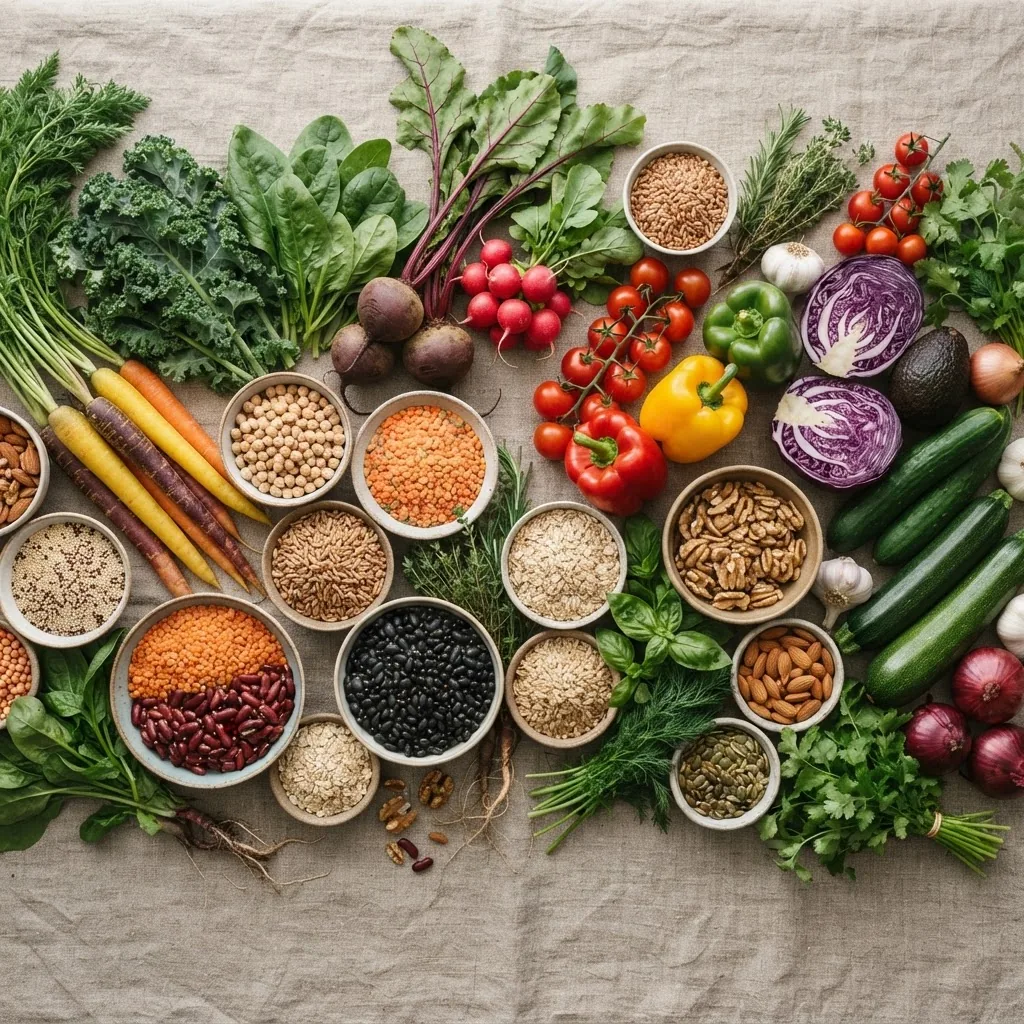
"O mankind, eat from whatever is on earth that is lawful and tayyib."
(Qur'an 2:168)
Walk through the aisles of any supermarket and you will find shelves filled with products proudly displaying the word "halal." For many Muslims, this is the first question we ask before placing something into our shopping basket.
Is it halal?
It is an important question, and one that should never be neglected.
Yet the Qur'an asks us to consider something more.
Again and again, Allah ﷻ does not simply command us to eat what is lawful. He commands us to eat what is tayyib. The two words appear together so frequently that it is difficult to separate them. Halal tells us whether something is permissible. Tayyib asks whether it is wholesome, pure, nourishing and good.
Perhaps somewhere along the way we became so occupied with the first question that we forgot to ask the second.
The difference is subtle, yet it changes everything.
Imagine standing before a table after a long day of fasting in Ramadan. On one side sits fresh fruit, wholesome bread, olives, water and a simple home-cooked meal. On the other sits an abundance of sugary drinks, heavily processed food and products whose ingredients require a chemistry degree to understand. Both meals may carry a halal certification.
Yet are they equally tayyib?
The Qur'an gently encourages us to pause before answering.
Food has never been merely a source of calories. It is one of the most intimate relationships we have with the creation of Allah ﷻ. Several times each day we take something from the earth and make it part of ourselves. It becomes our blood, our muscles, our thoughts and the energy with which we worship our Lord.
It is no surprise that Islam asks us to reflect upon what we place into our bodies.
The Prophet Muhammad ﷺ once spoke of a traveller who had all the outward signs of humility. He had journeyed far. His hair was dishevelled. Dust covered his clothes. He raised his hands to the heavens saying, "My Lord, my Lord." Yet the Prophet Muhammad ﷺ explained that his food was unlawful, his drink was unlawful and his clothing was unlawful, asking how his supplication could be accepted.
This hadith reminds us that what enters the body affects far more than physical health. It shapes the condition of the heart and our relationship with Allah ﷻ.
Perhaps we spend too much time counting calories and too little time considering the moral and spiritual story behind our food.
Where did it come from?
Who produced it?
What journey did it take before reaching our plate?
Was it grown with care or manufactured without restraint?
Was it prepared with gratitude or consumed with heedlessness?
These are not merely environmental or economic questions. They are spiritual questions.
Every meal carries a story.
The Qur'an invites us to remember that every morsel is ultimately rizq from Allah ﷻ. If food is a gift, then eating becomes more than consumption. It becomes an act of gratitude.
This perspective changes the way we approach modern food.
Much of what fills our supermarkets is designed to satisfy our cravings rather than nourish our bodies. Convenience has become more valuable than quality. Quantity often takes precedence over contentment. We have become accustomed to eating food that travels thousands of miles, arrives wrapped in layers of plastic and contains ingredients that previous generations would scarcely recognise.
None of this necessarily falls outside the boundaries of halal.
But does it draw us closer to tayyib?
This question is not intended to produce guilt or make life unnecessarily difficult. Islam is a religion of balance, not hardship. Rather, it encourages mindfulness. Every choice we make is an opportunity to ask whether we are honouring the trust that Allah ﷻ has placed in our care.
The same reflection extends to the animals from which we eat. The Prophet Muhammad ﷺ taught mercy not only towards people but towards every living creature. He ﷺ became upset when a bird was separated from its chicks, reminding his Companions رضي الله عنهم that compassion extends beyond human beings. The one who taught kindness to animals surely intended that Muslims should never become careless about the lives that sustain their own.
To eat meat with gratitude is one thing.
To consume it thoughtlessly is another.
The believer remembers that every blessing has a cost and every blessing deserves thanks.
Perhaps this is one of the forgotten wisdoms behind Ramadan.
Fasting teaches us that we do not live simply to eat. Hunger softens the heart. Gratitude transforms an ordinary date and a glass of water into a feast. The month reminds us that food is not an entitlement but a mercy from Allah ﷻ.
When gratitude returns, excess begins to disappear.
Moderation replaces indulgence.
Contentment replaces greed.
The table once again becomes a place of remembrance.
In an age overflowing with nutritional advice, dietary trends and conflicting opinions, the Qur'an offers a beautifully simple principle.
Seek what is halal.
Strive for what is tayyib.
Not everything that is permissible is beneficial.
Not everything that fills the stomach nourishes the body.
Not everything that nourishes the body strengthens the heart.
The believer seeks all three.
Perhaps that is why the Qur'an joins these two words together so often.
Halal protects our obedience.
Tayyib cultivates our excellence.
One teaches us what we may eat.
The other reminds us of the kind of people we are striving to become.