
Islamic Mindfulness: The Art of Being Present
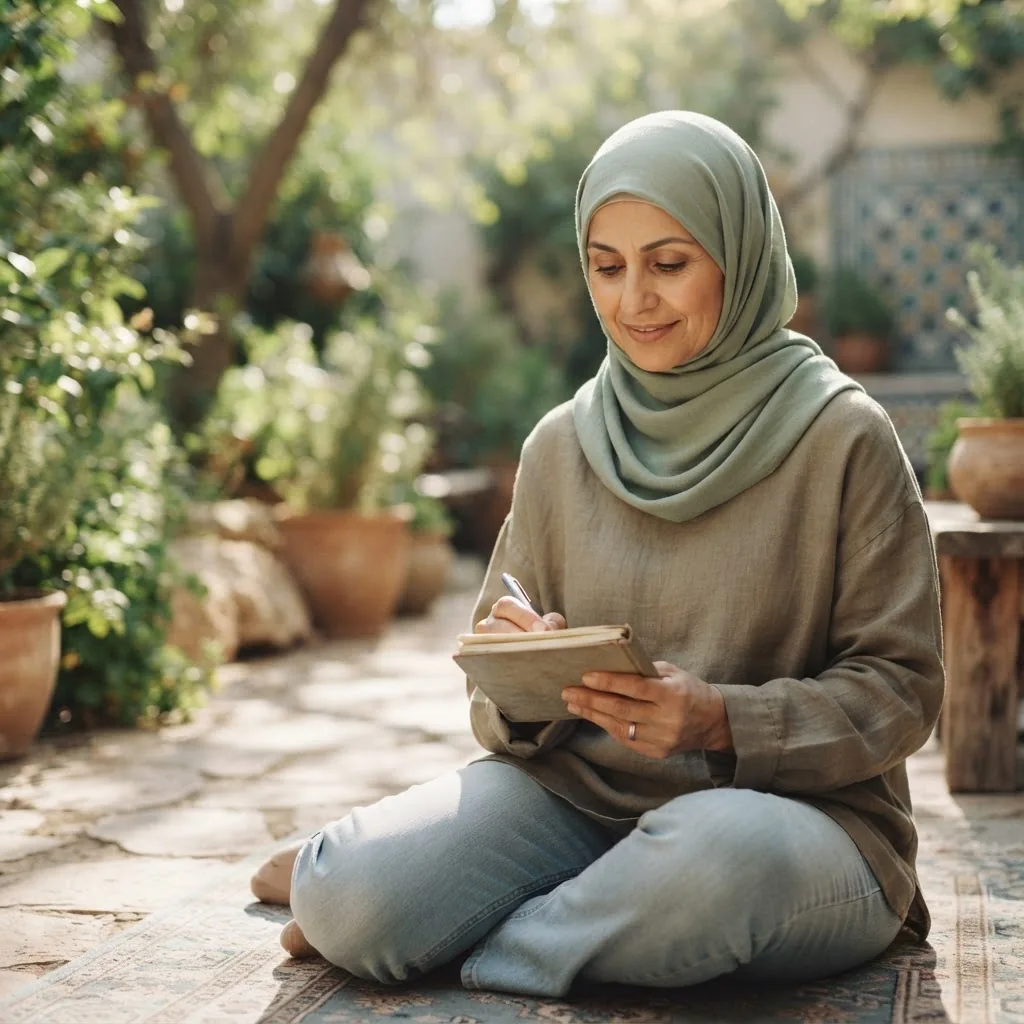
"What you pay attention to will define you."
We often hear that modern life is busier than ever. Our phones buzz constantly, emails arrive by the minute, and social media competes relentlessly for our attention. Yet perhaps the greatest problem is not that we have too little time, but that we are rarely fully present in the time we have.
Classical Muslim scholars recognised this centuries ago. They understood that the greatest distraction was not simply external noise, but an inner inability to direct one's attention towards what truly matters. As one scholar observed, the distracted person is not really choosing at all- they are simply reacting to whatever demands their attention.
Today, mindfulness is often presented as a technique to reduce stress or improve concentration. While these benefits may be valuable, the Islamic tradition offers a far richer understanding. Mindfulness is not merely awareness of the present moment; it is presence with Allah.
The Only Moment We Truly Own
We spend much of life living in two places that do not exist.
We replay yesterday's mistakes.
We worry about tomorrow's uncertainties.
Yet the only moment we have been given is the one we are living right now.
The Qur'an describes the friends of Allah as those who have "no fear concerning the future, nor do they grieve over the past." They are not imprisoned by regret or anxiety. They are present, trusting their Lord and responding to what He has placed before them today.
This is not passivity. It is purposeful presence.
Where Is Your Heart?
One of the profound insights of the early scholars is that your "time" is not simply measured by a clock. Your time is wherever your heart resides.
If your heart is absorbed by worldly distractions, then your life becomes consumed by them.
If your heart is filled with gratitude, remembrance and awareness of Allah, then every ordinary moment becomes an opportunity for worship.
The question is therefore not simply, "How am I spending my time?" but rather, "Where is my heart right now?"
Time Is a Trust
Imam al-Shāfiʿī famously said:
"Time is a sword; if you do not cut with it, it will cut you."
Every day that passes quietly takes a small part of our lives with it. We often say we are "killing time," but the reality is the opposite- time is gradually carrying us towards our meeting with Allah.
Recognising this does not make life gloomy. Instead, it gives every moment value.
A conversation with your parents.
Playing with your children.
Smiling at a stranger.
Reading a page of the Qur'an.
Pausing before speaking.
Each becomes significant because it is performed consciously for Allah.
Choosing Attention
Our attention is one of the greatest gifts Allah has entrusted to us.
Every notification, headline and distraction competes for it.
The believer chooses where that attention is directed.
Rather than beginning the day by asking, "What do I want to accomplish today?", perhaps we should ask a different question:
"How can I best serve Allah in the moments He has given me today?"
That single shift transforms productivity into worship and ordinary routines into acts of devotion.
A Practical Exercise
Today, choose one activity and perform it with complete presence.
It might be your prayer.
Your morning coffee.
Walking into work.
Speaking with your spouse.
Before you begin, pause for a few seconds and silently say:
Bismillāh.
Take a slow breath.
Remember that Allah sees you.
Then give your full attention to that one task.
You may discover that true mindfulness is not about escaping the present moment- it is about meeting Allah within it.
Reflection
Modern mindfulness teaches us to be aware of the present.
Islam teaches us to be present before Allah.
When attention is guided by faith, every moment becomes an opportunity to grow in gratitude, deepen our character and draw closer to our Creator.
Perhaps the greatest question we can ask ourselves each day is not, "How busy was I?" but rather, "Was my heart truly present?"