
A look Into Our Garden
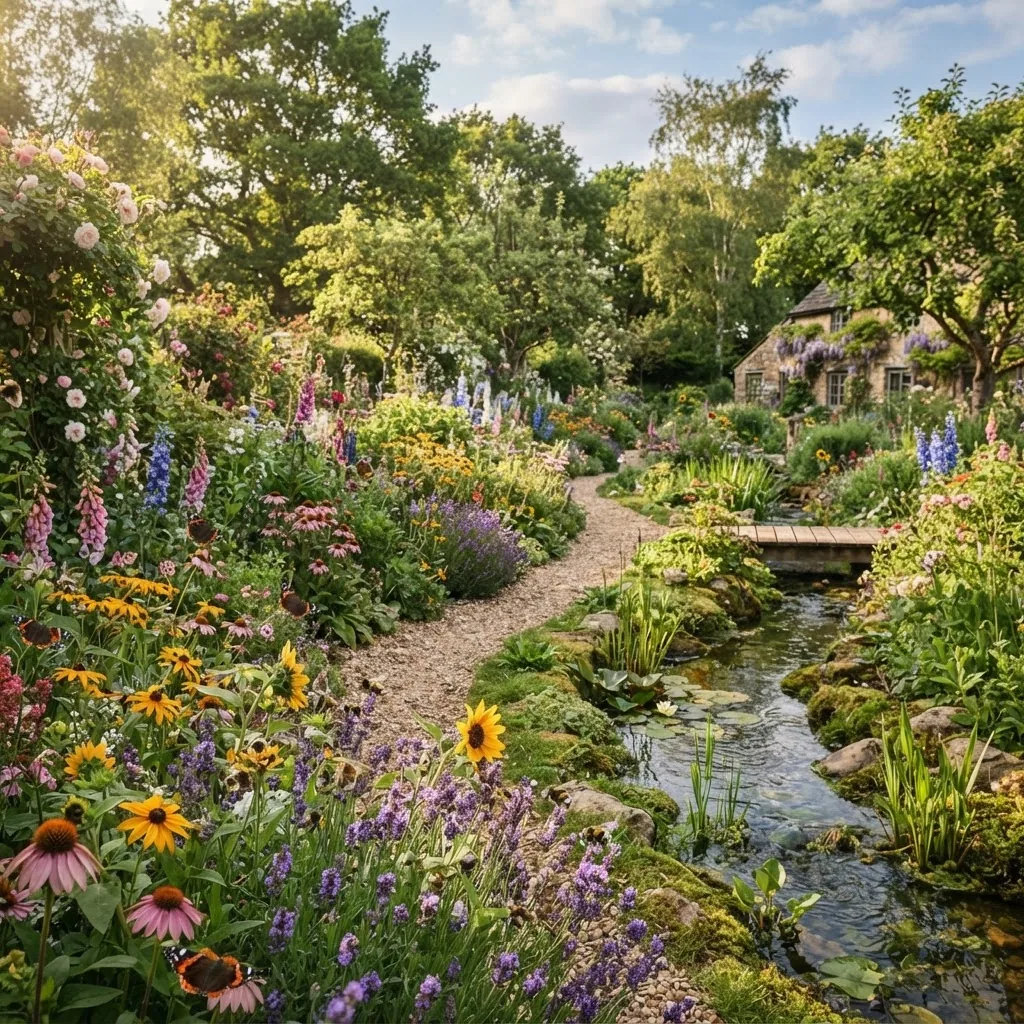
There is a reason gardens have captivated the human heart throughout history. Long before they became places of leisure, they were symbols of peace, beauty and restoration. A garden is not admired simply because it contains flowers. It is admired because everything within it exists in harmony. Every tree, every fragrance and every stream contributes to an environment that brings tranquillity to those who enter it.
Perhaps this is why the human heart is so often drawn to the image of a garden. Deep within us is a longing for order amidst chaos, beauty amidst hardship and peace amidst the noise of everyday life. We instinctively recognise that a flourishing life resembles a well-tended garden far more than an untamed wilderness.
Yet gardens do not appear by accident.
No gardener scatters seeds onto dry ground and expects abundance. The soil must be prepared. Weeds must be removed. Plants must be watered. Growth requires patience, consistency and care. Left unattended, even the most beautiful garden slowly becomes overgrown.
The human heart is remarkably similar.
Our thoughts are seeds. Our habits are the water that nourishes them. The people we spend time with, the words we hear, the books we read and the conversations we entertain all influence what eventually grows within us. Every day we are cultivating something, whether we realise it or not.
The challenge is that weeds often grow more quickly than flowers.
Resentment requires little effort. Pride appears naturally when it is left unchecked. Envy spreads quietly. Constant distraction slowly crowds out reflection. Before long, the heart can become so occupied with noise that it struggles to recognise beauty when it appears.
This is why periods of stillness are so important. In every generation, people have sought moments away from the constant demands of life, not because the world is inherently bad, but because distance allows perspective. Silence reveals thoughts that constant activity conceals. Solitude exposes attachments that endless busyness disguises. We cannot tend to the garden within if we never stop long enough to look at it.
Modern life often measures success by visibility. We are encouraged to display achievements, opinions and experiences as widely as possible. Yet some of the most valuable aspects of life grow best in quiet places. A seed germinates beneath the soil long before anyone sees the first green shoot. The strongest roots develop unseen. Likewise, sincerity, humility and wisdom are rarely formed in the spotlight. They mature through hidden acts of devotion, private struggles and quiet moments known only to Allah.
There is a profound difference between appearing successful and becoming whole.
The world rewards what is visible. Character is built in what remains unseen.
This hidden work often begins through service. Serving another person has a remarkable way of reducing the importance of the self. Whether caring for a parent, helping a neighbour, teaching a child or supporting a colleague, genuine service gently shifts our attention away from our own desires. We discover that fulfilment is found less in being admired and more in being useful. In serving others with sincerity, we often find that we ourselves are the ones being transformed.
Nature quietly teaches these lessons if we are willing to observe it. A flower does not compete with the flower beside it. It simply fulfils the purpose for which it was created. A tree offers shade without choosing who deserves it. A river continues to flow whether anyone notices it or not. Creation fulfils its purpose without seeking recognition, reminding us that the most beautiful lives are often those lived with quiet sincerity.
The same principle applies to knowledge. Information alone rarely changes a person. We live in an age where learning has never been easier, yet wisdom often feels increasingly scarce. Real knowledge does more than inform the mind. It softens the heart, refines character and changes the way we see the world. When knowledge increases pride, argumentation or arrogance, something essential has been lost. True understanding should make us gentler, more compassionate and more aware of our dependence upon Allah.
The heart also needs protection. Just as a precious garden is surrounded by walls to preserve what grows within it, our inner lives require boundaries. Not every conversation deserves our attention. Not every opinion deserves a response. Not every distraction deserves an invitation into the heart. Protecting our attention is one of the great challenges of our time because whatever repeatedly enters the heart eventually begins to shape it.
Perhaps the greatest mistake we make is believing that fulfilment lies somewhere outside ourselves. We search endlessly for the next achievement, the next possession or the next experience, hoping it will finally bring lasting contentment. Yet lasting peace has never been produced by accumulation alone. It grows from a heart that remembers its Creator, finds meaning in service and remains grateful for what it has already been given.
A flourishing life is not one in which every difficulty disappears. Even the finest gardens experience storms, changing seasons and periods when growth seems slow. The difference is that healthy roots remain alive beneath the surface, quietly drawing nourishment until spring returns.
The same is true of the human heart.
When it is nourished by remembrance, gratitude, service and sincere purpose, it develops a resilience that outward circumstances cannot easily shake. Challenges still come, disappointments still hurt and losses are still felt, but they no longer define the person. Beneath the surface, something stronger continues to grow.
Perhaps that is the greatest lesson of the garden.
Our task is not simply to admire beauty.
It is to cultivate it within ourselves.